A realistic homeowner guide to what solar can and cannot do for whole-home power.
Solar panels are now common across the United States, and many homeowners considering installation ask the same question: can solar panels actually power my entire home?
The short answer is yes, solar panels can power an entire home in many situations. The more accurate answer is that it depends on your energy usage, system size, location, and whether you include battery storage.
Understanding how solar power works in real-world conditions helps set expectations and prevents disappointment.
☀️ How solar panels power a home
Solar panels generate electricity by converting sunlight into energy through photovoltaic cells. That electricity flows through an inverter, which converts it into usable power for household systems.
The U.S. Energy Information Administration explains that residential solar systems typically operate alongside the utility grid rather than completely replacing it. U.S. Energy Information Administration – Solar Explained
When solar panels produce more electricity than your home uses, excess energy is sent to the grid. When production is lower, your home automatically draws electricity from the grid.
🏡 What “powering your entire home” really means
Powering your home with solar usually does not mean disconnecting from the grid. Instead, it means generating enough electricity over the course of a year to offset your total usage.
- Annual solar production equals annual consumption
- Utility bills are reduced or eliminated
- The grid provides backup when needed
This approach is often called net-zero electricity usage.
📊 How much electricity does the average home use?
The size of the solar system you need depends largely on how much electricity your household uses.
The U.S. Energy Information Administration reports that the average U.S. home uses roughly 10,000 to 11,000 kilowatt-hours of electricity per year, though usage varies by region and lifestyle. U.S. Energy Information Administration – Electricity Use in Homes
🔋 System size, roof space, and sunlight exposure
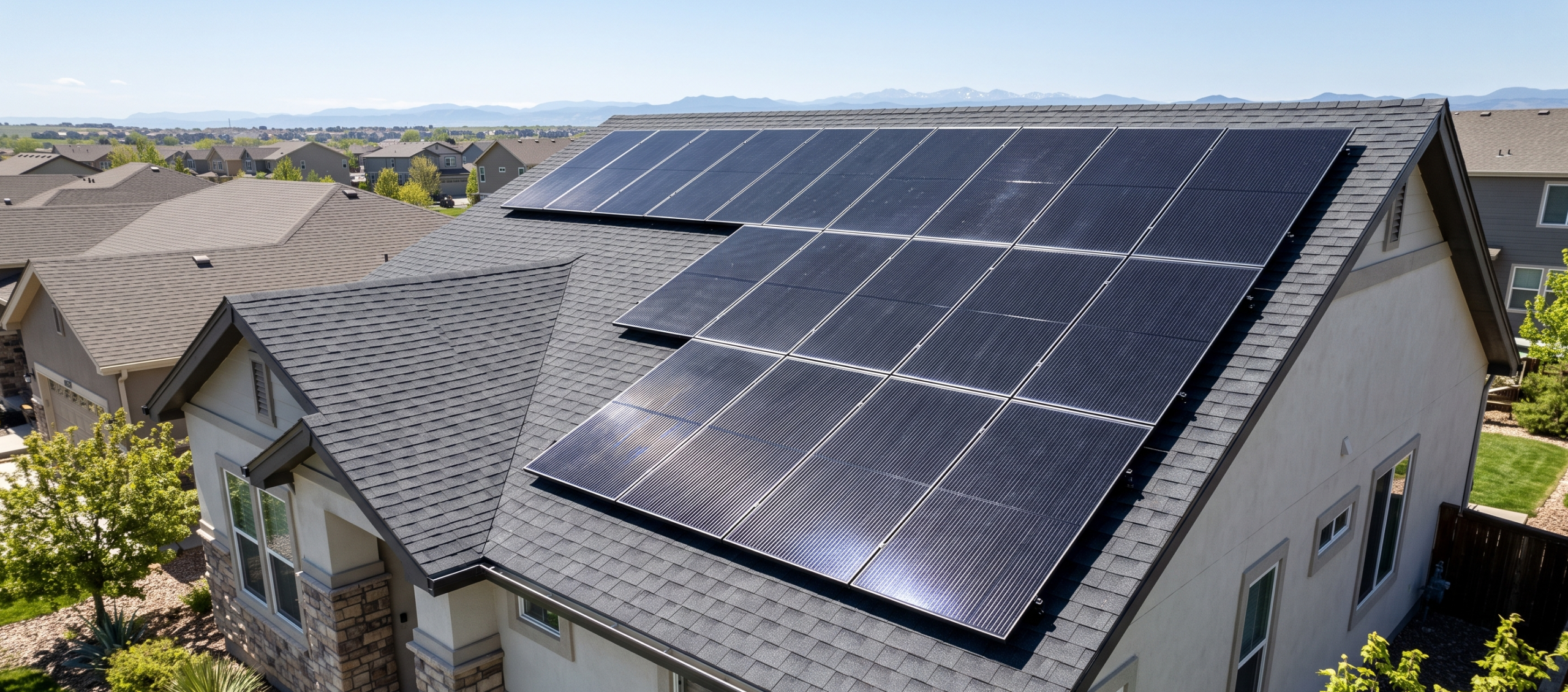
To power an entire home, your roof must support enough panels. Roof orientation, shading, pitch, and usable space all affect total energy production.
🧮 Estimating solar production for your home
Production estimates should be based on location-specific data rather than national averages.
The National Renewable Energy Laboratory provides the PVWatts calculator, which estimates solar production based on system size and geographic location. National Renewable Energy Laboratory – PVWatts Calculator
🔌 Do you need battery storage?
Solar panels alone do not supply power during grid outages. Battery storage allows excess daytime energy to be used at night or during outages.
Homes seeking complete energy independence typically require batteries, which increase system cost.
⚠️ Common misconceptions about whole-home solar
- Solar works the same in every climate
- You must go off-grid to power your home
- Solar eliminates all bills instantly
- Batteries are always required
📖 A realistic homeowner example
A homeowner installs a solar system sized to match annual electricity use. During sunny months, the system produces excess power. During winter, the home draws from the grid.
Over the course of a year, solar offsets nearly all electricity use without disconnecting from the grid.
Can solar power your entire home?
The answer depends on your roof, usage, and goals. A professional solar assessment can show exactly how much of your home’s power solar can realistically cover.
Get a customized production estimate before committing.
Get a Solar Power Assessment